
RETRO-FUTURISM/SURREALISM – 1920’s Cell Phone Tower
A description of the style or approach taken in your design and the approximate time period this style was most prevalent. Also, what are the key identifying characteristics of the style?
Surrealism began in the early 1920s as a cultural art movement that creatively explored the unconscious. This bizarre style used the juxtaposition of everyday objects to create illusions of the mind; obscure scenes of the unimaginable. Objects are often photorealistic, shown in extreme detail but coupled with the unexpected, or ‘element of surprise.’ These unusual environments are designed to unlock the imagination. The more extreme the juxtaposition between the real and unreal, the more powerful and emotionally intense. The restrictive customs of previous art movements were controlled by reason. Surrealistic subject matter defied the impossible. Dreams and nightmares collide with reality to create visual representations of visions and hallucinations. Artists of this period were influenced by philosophy and psychology. The “real” was believed to repressed the imagination. The structure of reality was shed for free form and alternative contexts.
Research for this project included the examination of telephone communication devices from the same era/time period as Surrealism. The desire was to create an everyday object (the telephone) from the early 1920s and do so with a nod to the surrealistic art movement. Through research of the visual design style of these devices, I was able to find images of the first long-distance transmitter. The long-distance transmitter was developed in the late 1880s and is similar to the structure of the contemporary cell phone tower. I ultimately selected the structure of the 1919 dial telephone as the design inspiration for the cell phone tower. Coast-to-coast phone service began in 1915, just a few years prior to the design of this handheld device. Through the research of this era, I was able to highlight interesting concepts from Surrealism and include those elements as part of the environment for the 1920s phone tower.
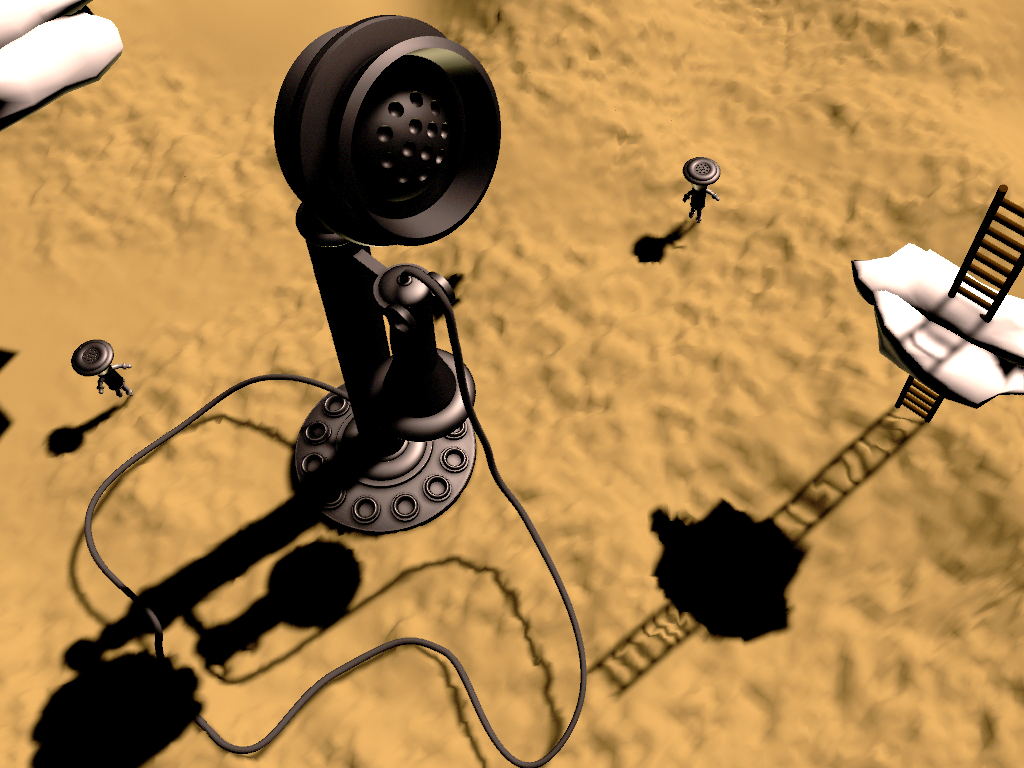
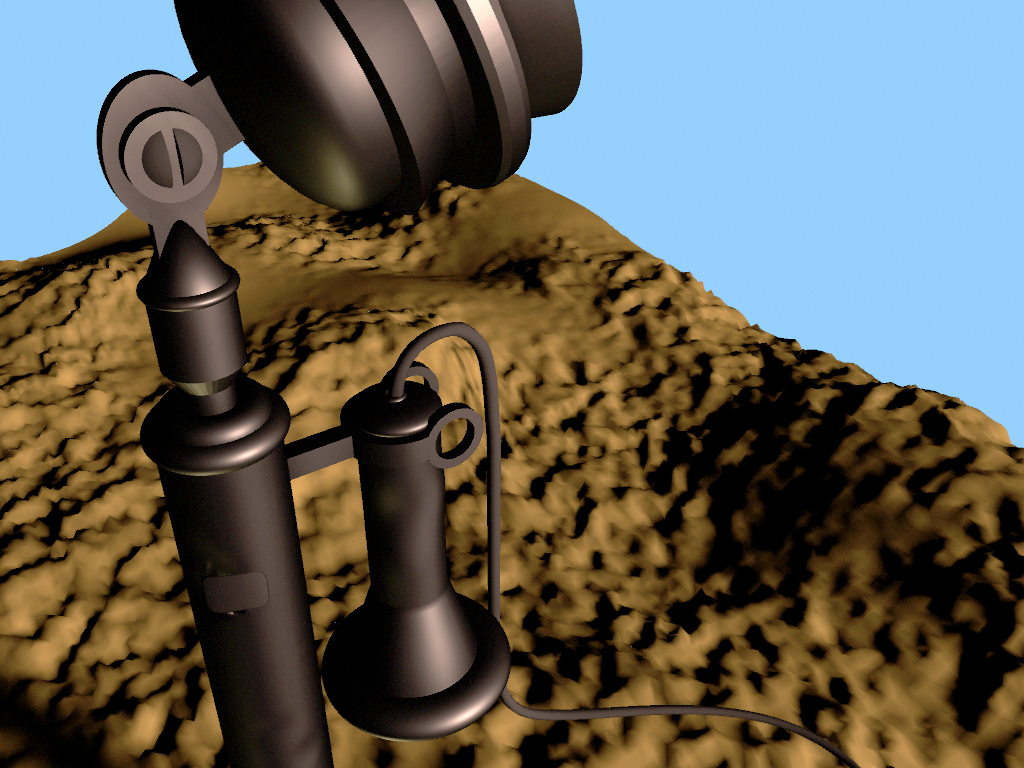
The scenes selected from this model are designed to convey the realism of the 1920s communication device (the dial telephone) and the juxtaposition of the scale of that device to the surrounding natural environment. This phone tower is set in a rural area of the country and soars almost 200 feet into the atmosphere. It is often surrounded by clouds as weather systems move through the area. The audio speaker at the top of the tower rotates 360 degrees to ensure the best reception during these atmospheric changes. The input jacks at the base of the structure are for residents to “plugin.” It is through these inputs they are able to “connect” with others at a great distance. The clouds and ladder are visual elements appropriated from the surrealist time period. These symbols have been incorporated into the scene in order to introduce the bizarre and unexpected. They are intended to suggest the concept of dreams with the use of clouds, and the concept of progression to the next level with the use of a ladder. The residents or “Communicators” in this surrealistic world are represented by handsets with Switchboard Operator inputs as limbs. It has been noted that since the installation of this phone tower, coast-to-coast communication has greatly increased. The device shows a bit of wear from the harsh elements. Sun and heat have weathered the surface, as well as the occasional minor damage sustained from a careless bird in flight.
A description of the process the device or machine uses as it operates, task it performs
This phone tower is used to increase accessibility of the “Communicators” to others with the use of long-distance communication technology. This device was erected in an open space area; equidistant from the various cities it services in this region. The audio speaker at the top of the tower rotates 360 degrees to ensure the best reception during atmospheric changes. The input jacks at the base of the structure are for residents to “plugin.” It is through these inputs they are able to “connect” coast-to-coast with friends and family. The residents or “Communicators” in this surrealistic world are represented by handsets with Switchboard Operator inputs as limbs. It has been noted that since the installation of this phone tower, long-distance communication has greatly increased. The device shows a bit of wear from the harsh elements. Sun and heat have weathered the surface, as well as the occasional minor damage sustained from a careless bird in flight.